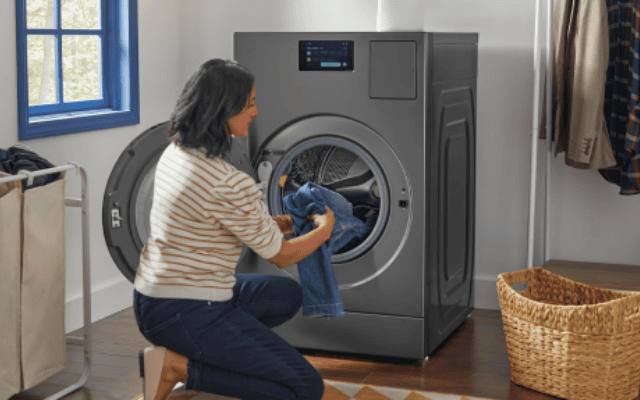
A leaking washing machine almost always traces to one specific location — the door, the bottom of the machine, the detergent drawer, or the back. Identifying where the water appears during or after a cycle is the fastest way to narrow the cause. This guide covers each leak location for Toronto and GTA homeowners, what is likely behind it, and when to book a washer repair Toronto appointment rather than waiting.
Key Takeaways
- A leaking washing machine traces to one of four locations: door, bottom, detergent drawer, or back — where the water appears narrows the cause.
- A faulty door seal is the most common cause of a front-load washing machine leaking at the door.
- Supply hoses should be replaced every 3 to 5 years regardless of visible condition — braided stainless steel fails less abruptly than rubber.
- A clogged drain pump filter causes leaks during the drain cycle — clean it monthly.
- An off-balance washing machine can produce leaks during the spin cycle by pressing laundry against the door seal.
- Same-day washer repair is available across Toronto and the GTA.
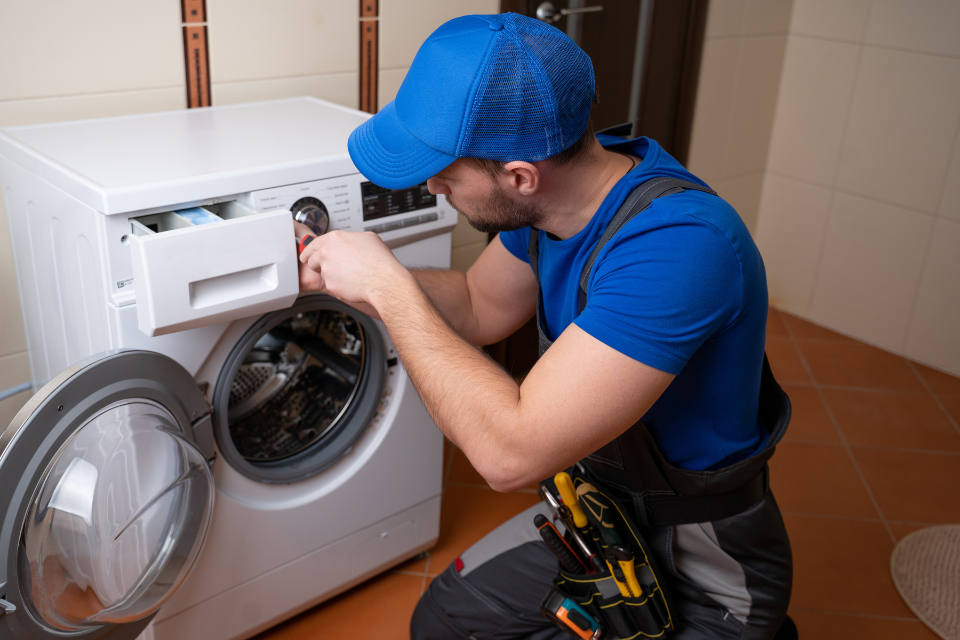
Where the water pools tells you what has failed.
Water at the door points to the door seal or door alignment. Water underneath the machine points to the tub seal, drain pump, or a loose internal hose.
Water at the detergent drawer points to a clogged dispenser or excess detergent. Water at the back of the machine points to the supply hoses or drain hose connection.
Washing Machine Leaking From the Door
A front-load washing machine leaking at the door almost always traces to the door boot seal — the rubber gasket that lines the door opening and keeps water inside the drum. A torn seal, detergent buildup preventing a clean close, or a door that does not latch fully all create a path for water to escape at the door rim.
Inspect the full circumference of the seal for tears, gaps, or hardened residue when water appears at the door.
For causes, diagnosis, and what door seal replacement involves and costs, see the guide on front load washer leaking from the door seal.
Washing Machine Leaking From the Bottom
Water underneath the machine — not at the door rim or behind it — traces to the tub seal, drain pump, drain pump filter, water pump, or a loose internal hose.
For the full breakdown and what each repair involves, see the guide on washer leaking from the bottom.
Washing Machine Leaking From the Detergent Drawer
Clogged Detergent Dispenser
The detergent dispenser channels water and detergent into the drum during the filling cycle. When residue or debris blocks the channel, water backs up and overflows through the dispenser housing. The result is water dripping from the front of the machine before the wash cycle is fully underway.
Remove the dispenser drawer and rinse it under warm water. The dispenser cavity behind the drawer — the slot in the machine — also collects residue and should be wiped out at the same time. A monthly cleaning prevents blockages and is one of the simplest appliance care steps available.
Too Much Detergent
Front-load washers require high-efficiency (HE) detergent used in smaller quantities than standard instructions suggest. Too much detergent produces excess foam that the machine cannot drain cleanly. The foam can overflow from the dispenser drawer during the rinse cycle, pooling at the front of the machine and creating the appearance of a seal or pump leak.
Use the quantity specified for HE machines — typically well under the maximum line on the measuring cup. If the drawer consistently overflows after cleaning, confirm the detergent type and quantity before booking a service call.
Washing Machine Leaking From the Back
Supply Hoses
Washing machine supply hoses connect the machine to the hot and cold water valves at the wall. Loose fittings at the wall tap or at the machine inlet allow water to drip from behind the machine, where it can go unnoticed until a puddle appears on the laundry room floor.
Inspect both hoses once a year for cracks, kinking, or rust at the fittings. Replace supply hoses every 3 to 5 years regardless of visible condition — braided stainless steel hoses are more durable than rubber and fail less abruptly.
Drain Hose
The drain hose carries wastewater from the pump to the standpipe or laundry tub. A loose drain hose connection at the standpipe, a kink that restricts flow, or a crack in the hose can all cause water to drip or pool at the back of the machine during the drain cycle.
Confirm the drain hose is seated securely in the standpipe and has not been crushed by the machine being pushed too close to the wall. A loose connection is a straightforward fix; a cracked hose requires replacement.
Off-Balance Washing Machine and Spin Cycle Leaks
An off-balance washing machine vibrates heavily during the spin cycle. When the machine shakes enough to shift across the floor, laundry piled to one side can press directly against the door seal — forcing water past the gasket.
Check that the machine sits level on all four feet. Adjustable levelling feet allow each corner to be raised or lowered independently.
Redistributing an unbalanced load before restarting the spin cycle prevents the problem from recurring.
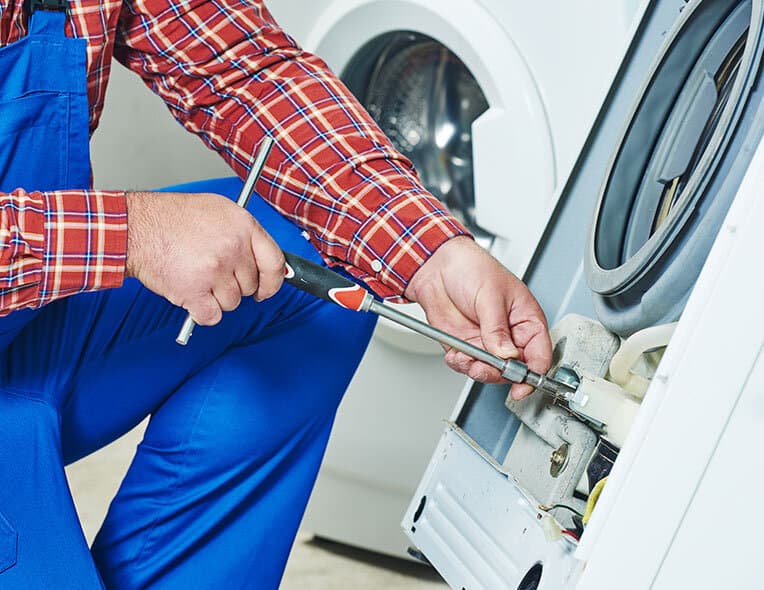
Washing Machine Leaking When Not in Use
A washing machine that drips when no cycle is running has different causes than one that leaks mid-cycle.
The washer inlet valve — the solenoid valve that controls water supply into the drum — can fail in a partially open position, allowing water to slowly fill the drum between cycles. That water eventually overflows through the door seal or the pump.
A loose drain hose can also allow water to leak out through the drain connection when the machine is idle.
If the machine is leaking with no cycle running, confirm the supply valve is fully closed before booking a diagnostic.
When a Leaking Washer Needs a Technician
Most homeowners can inspect the door seal, clean the detergent dispenser, check the hose connections at the back of the machine, and confirm the machine is level. These steps resolve a significant portion of washer leaks without a service call.
When the leak source is not clear — the machine leaks but the obvious external sources appear intact — the fault is likely internal: the tub seal, the drain pump housing, a cracked internal hose, or the inlet valve.
These components require disassembly to inspect and replace. For what each repair typically costs in Toronto, see the washing machine repair cost guide.
Frequently Asked Questions
Why is my washing machine leaking from the bottom?
Water under the machine most commonly traces to the drain pump, the drain pump filter, the tub seal, or a loose internal hose. A clogged drain pump filter is the most accessible starting point — it is designed for homeowner access and should be cleaned monthly. If the filter is clear and the leak continues, the pump housing, tub seal, or an internal component needs a professional inspection.
Why is my leaking washing machine worse during the drain cycle?
A drain pump filter clogged with lint and debris restricts flow and can force water back through the pump housing and onto the floor during the drain phase. A failed pump seal or cracked pump housing produces the same symptom. Cleaning the filter is the first step. If the leak continues after the filter is cleared, a technician should inspect the pump before the next wash cycle.
How do I prevent water leaks in my washing machine?
Replace supply hoses every 3 to 5 years and inspect them annually for cracks or rust at the fittings. Use the correct type and quantity of HE detergent to prevent dispenser overflow. Clean the drain pump filter monthly. Leave the door ajar after each cycle to allow the door seal to dry. Confirm the machine is level so spin loads do not stress the door seal.
Book Washer Repair With Toronto Appliance Repairs
Toronto Appliance Repairs serves homeowners across Toronto, North York, Scarborough, Etobicoke, Mississauga, and the wider GTA with same-day washer repair Toronto appointments for leaking washing machines and all other washer faults.
Skilled technicians arrive with common replacement parts and confirm the diagnosis before any repair is approved. The diagnostic fee is $95 plus HST ($129 plus HST for gas appliances), confirmed upfront and applied toward the repair cost. Transparent pricing — no hidden fees.
Call 416-918-2700 to book today.
For a full list of appliance repair services across Toronto and surrounding areas, visit Toronto Appliance Repairs services.