Key Takeaways
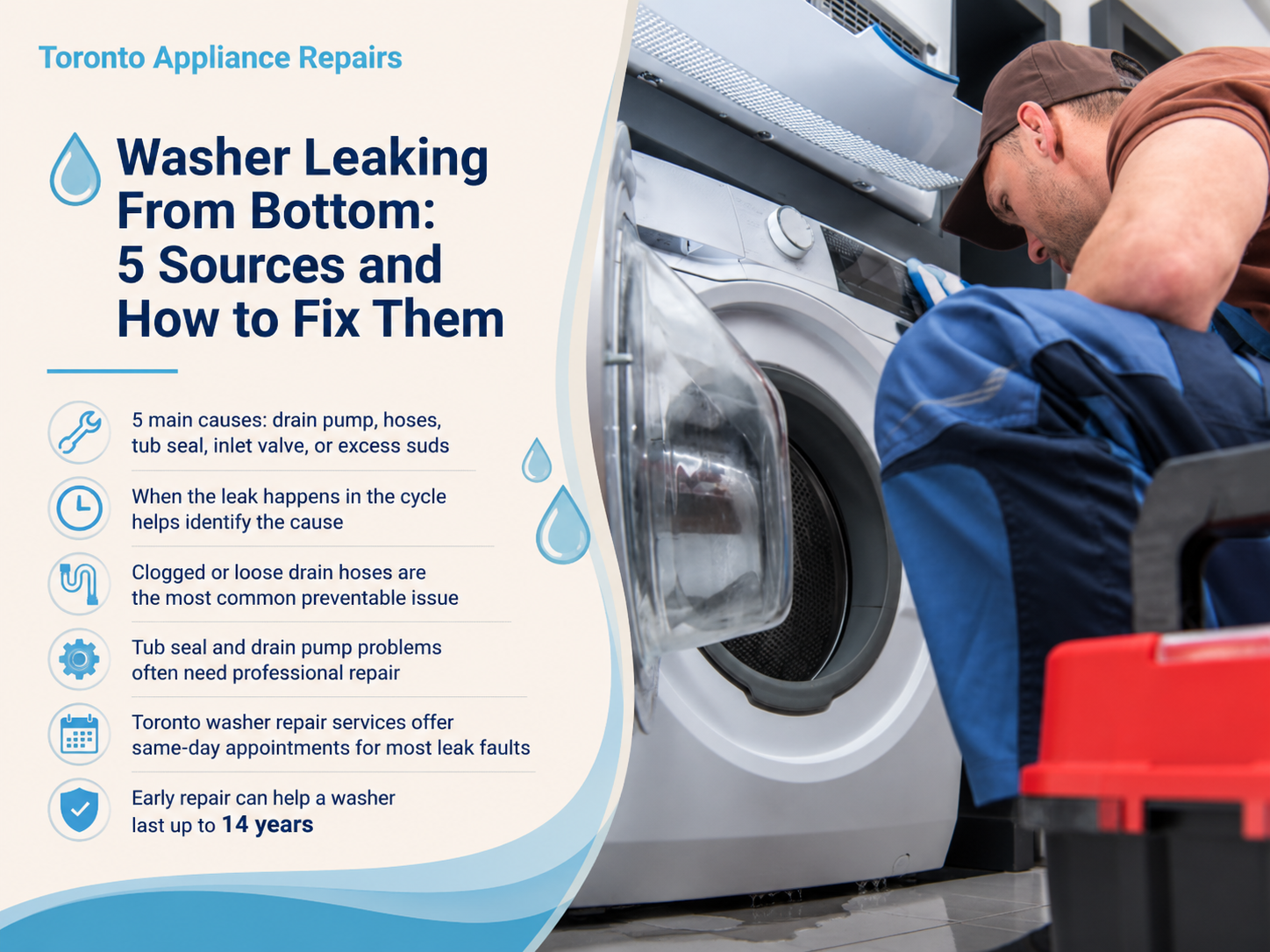
- A washer leaking from the bottom has five main sources: drain pump, hoses, tub seal, inlet valve, or excess suds
- Most leaks occur during a specific cycle — identifying when the leak happens narrows the cause immediately
- A clogged drain hose or loose hose connection is the most common and most preventable cause
- Tub seal failure and drain pump damage require professional washing machine repair
- Toronto washer repair services offer same-day appointments for most leak faults
- Washing machines can last up to 14 years with proper maintenance — a leak caught early saves the appliance
Introduction
Your washer is leaking from the bottom — and water on a laundry room floor is never something to leave until later. A washing machine leak can damage flooring, subfloor, and cabinetry fast. The good news: a washer leaking from the bottom almost always traces to one of five specific sources. Identifying which one depends on when the leak occurs and where the water appears. This guide walks you through all five causes, what you can fix yourself, and when to call certified technicians for washing machine repair.
When Does the Leak Happen? Your First Diagnostic Step
Before inspecting any component, note exactly when the washing machine leak occurs:
- During the fill cycle — points to inlet hoses or the water inlet valve
- During the wash cycle — points to internal hoses, tub seal, or excess suds
- During the spin cycle — points to the drain pump, tub seal, or an off-balance machine
- During the drain cycle — points to the drain hose, pump filter, or a clogged drain hose
This single observation narrows the fault significantly and helps any appliance repair technician diagnose the problem faster on arrival.
Source 1: Damaged or Loose Drain Hose
The Most Common Cause
Loose or broken hoses often lead to washing machine leaks. The drain hose carries water from the drum to the standpipe after each cycle. A kinked hose, a loose connection at either end, or a crack in the hose wall all allow water to drip — often pooling directly under the machine.
How to Check
- Pull the washer away from the wall
- Inspect the drain hose from the pump to the standpipe
- Look for cracks, splits, kinks, or loose clamp connections at both ends
- Check for clogs in the drain hose — a blockage backs water up and forces it out through weak points
DIY or Professional?
Tightening a loose hose clamp is a safe DIY fix. Replacing a cracked or clogged drain hose is straightforward on most models and requires only basic tools.
Source 2: Damaged Drain Pump
A Common Cause of Bottom Leaks
A damaged water pump can cause leaks from the bottom. The drain pump sits at the base of the machine. When the pump housing cracks, its internal seals fail, or debris damages the impeller, water escapes during the spin and drain cycles — appearing directly underneath the machine.
Signs of a Drain Pump Problem
- Water dripping under the machine during the spin cycle
- Strange noises — grinding or rattling — when the machine drains
- Common washer issues like drainage problems occurring alongside the leak
DIY or Professional?
Inspecting the drain pump and internal hoses is necessary when diagnosing leaks. Pump replacement requires partial disassembly and is a job for skilled technicians. Repair costs for washers in Toronto can exceed $400 for pump-related faults depending on the model (HomeStars Canada, 2024).
Source 3: Faulty or Worn Tub Seal
What the Tub Seal Does
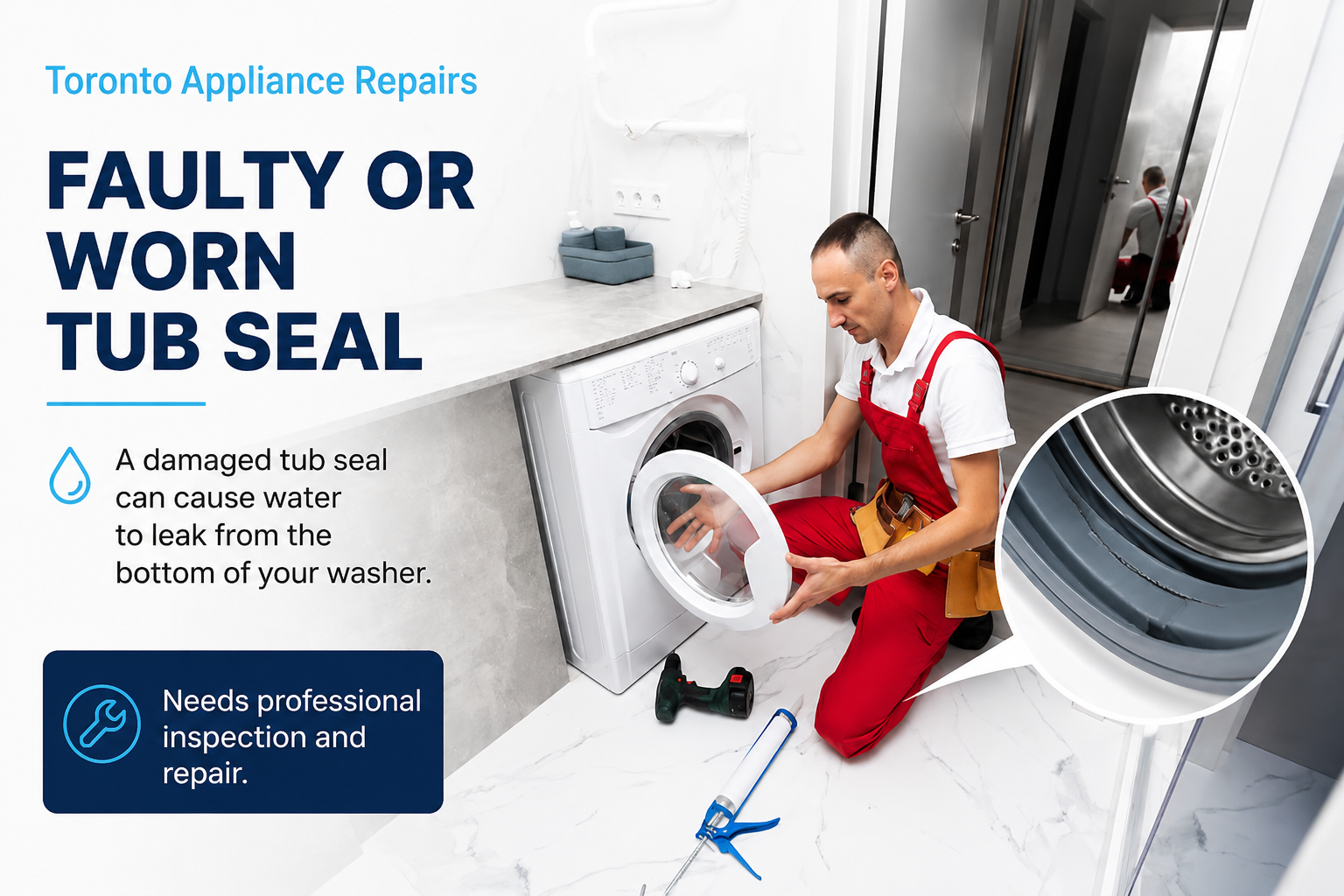
A worn tub seal can allow water to leak from the centre of the machine. The tub seal sits between the outer tub and the drum bearing, preventing water from reaching the motor. When it wears out — more common in older machines after heavy use — water leaks during the wash and spin cycle and drips from directly beneath the tub.
How to Identify It
- Water appears under the machine during the wash or spin cycle
- The leak comes from the centre, not the back or sides
- A faulty tub seal may result in water leaking during all cycles, not just one
DIY or Professional?
Tub seal replacement is one of the more involved washing machine repairs. It requires full drum disassembly. Licensed technicians are available for this repair across Toronto and the GTA — it is not a safe DIY job on most models.
Source 4: Loose or Faulty Fill Hoses and Inlet Valve
Leaks During the Fill Cycle
Leaks during the fill cycle may be due to loose fill hoses or a faulty inlet valve. The two fill hoses — hot and cold — connect your home’s water supply to the back of the machine. Over time the rubber washers inside the hose fittings degrade, and the connections loosen. A cracked or loose drain pipe or fill hose connection causes water to drip from the rear base of the machine.
How to Check
- Inspect both fill hose connections at the back of the washer
- Look for mineral deposits, corrosion, or visible cracks on the hoses
- Check the rubber washer inside each fitting — replace if flattened or cracked
- A faulty water inlet valve causes leaks at the valve body itself, not just the connections
DIY or Professional?
Replacing fill hoses and internal washers is a safe, low-cost DIY fix. Inlet valve replacement is straightforward for an experienced appliance repair technician and is typically completed in a single service call.
Source 5: Excess Detergent and Suds Overflow
An Overlooked but Very Common Cause
Excess soap can push out through overflow channels and cause leaks. When too much detergent is used — especially in a top loading washing machine not designed for high-efficiency (HE) detergent — suds overflow the tub and exit through the door seal, pump, or internal overflow channels. The water drips to the floor and appears to come from the bottom of the machine.
How to Identify It
- The leak occurs during the wash cycle, not the drain or spin cycle
- Suds are visible through the door or around the detergent drawer
- Leaks during the wash cycle often indicate compromised internal hoses or excessive suds
The Fix
- Switch to HE detergent if not already using it
- Use the correct measured amount — excess is the leading cause of suds-related leaks
- Run a drum-clean cycle with no detergent to clear residual soap buildup
This fix costs nothing and resolves the leak immediately if suds are the cause.
Load Washer Correctly to Prevent Leaks
How you load washer affects leak risk more than most owners realise:
- Do not overload the tub — excess weight during spin causes the drum to contact internal components and stress the tub seal
- Balance the load — an off-balance washer can leak during the spin cycle as the drum strikes the outer tub
- Checking the balance of the washing machine may prevent leaks during the spin cycle
- Use the right detergent type and amount — always match detergent to the machine type (HE vs. standard)
When to Call for Washing Machine Repair Services
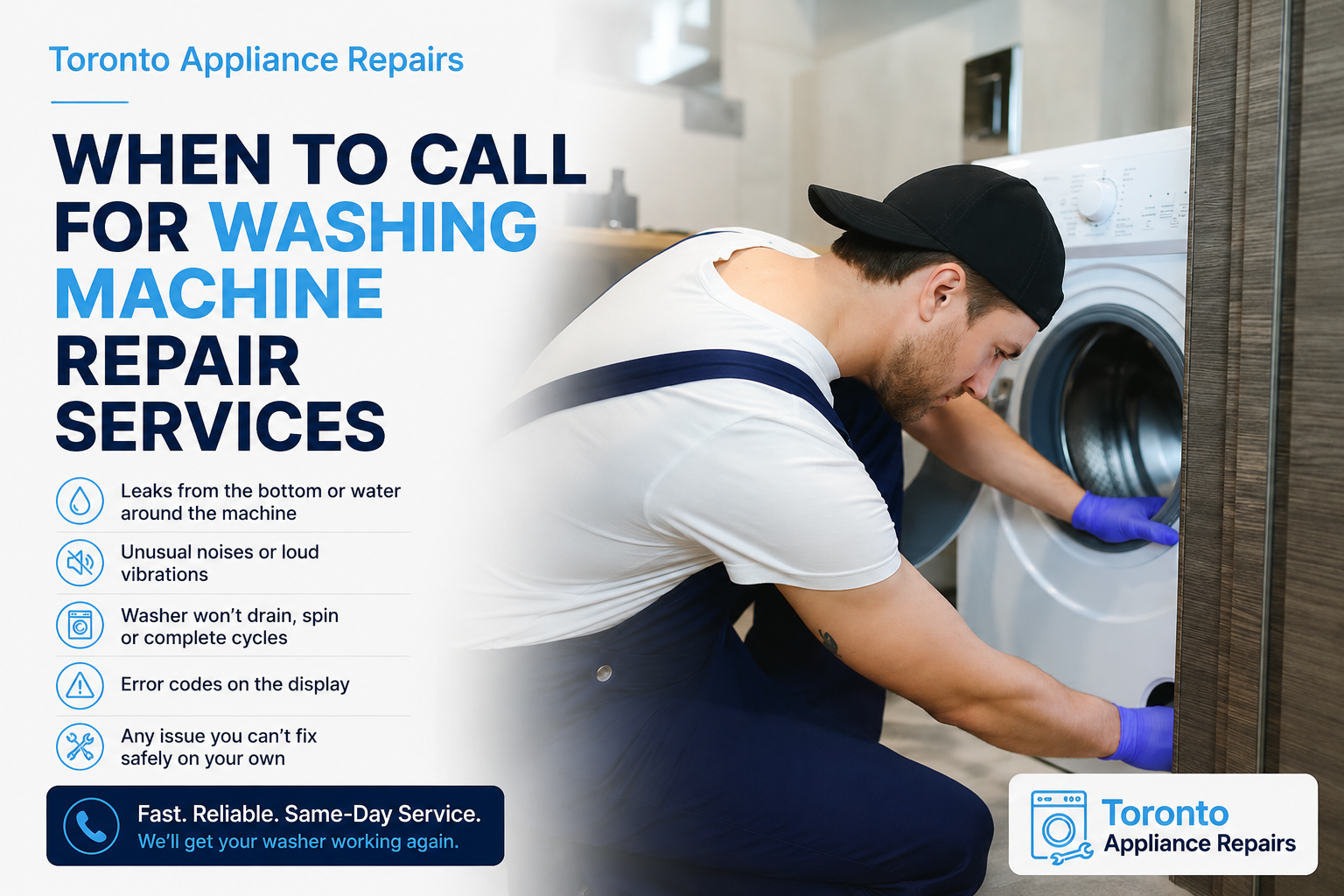
Call a Certified Technician For:
- Tub seal replacement — requires drum disassembly
- Drain pump replacement — requires internal access and spare parts
- Water inlet valve replacement — involves water supply connections
- Motor issues suspected alongside leaking
- Any leak you cannot trace to a specific source after the checks above
Common washer issues — leaks, spin failures, and drainage problems — are all within the scope of professional machine repair. Toronto washer repair services offer same-day appointments. Our certified technicians arrive with replacement parts and common parts for major brands.
Why Choose Toronto Appliance Repairs?
Certified Technicians, Clear Communication
Our skilled technicians are fully licensed and insured. Clear communication is our top priority — you receive a full explanation of the fault and a written cost breakdown before work begins. No hidden fees, no pressure, honest pricing from start to finish.
Same Day Service, Affordable Prices
We offer same day service across Toronto, North York, and the Greater Toronto Area. Most washing machine repair services are completed in a single visit at affordable prices. Our diagnostic fee applies toward the repair cost when you proceed.
Full Appliance Repair Services
We handle the complete range of appliance repair services — washing machine repair, dryer repair, dishwasher repair, oven repair, and stove repair — across all major brands. One trusted partner for every appliance repair need in your home.
Warranty on Every Repair
Every repair comes with a 30-day warranty on parts and labour. Customer satisfaction is not a goal — it is our standard on every job.
FAQ: Washer Leaking From the Bottom
Why is my washer leaking from the bottom during the spin cycle?
A leak during the spin cycle most commonly points to a damaged drain pump, a worn tub seal, or an off-balance load. A damaged water pump can cause leaks from the bottom when its housing or seals fail. A worn tub seal leaks from the centre of the machine. Check for strange noises during the spin cycle — grinding or rattling suggests pump damage. If the load is unbalanced, redistribute it and test again before calling for a service call.
Can I fix a washing machine leak myself, or do I need certified technicians?
Some leak sources are safe DIY fixes — tightening a loose hose clamp, replacing fill hose washers, or switching to HE detergent to stop suds overflow. Tub seal replacement, drain pump replacement, and inlet valve repair require disassembly and are jobs for certified technicians. Attempting internal repairs without the right spare parts and tools risks damaging additional components and voiding your warranty. When in doubt, a professional machine repair assessment protects both your appliance and your laundry room.
How do I know if my washer’s drain hose is causing the leak?
A clogged drain hose backs water up and forces it out through the weakest connection point — typically appearing as water dripping from the rear base of the machine during or after the drain cycle. Pull the washer from the wall and inspect the full hose length for kinks, cracks, or loose clamps at both ends. Check for clogs in the drain hose by disconnecting it and flushing with water. If the hose is clear and connections are tight, the fault is internal.
How much does washer repair cost in Toronto?
Most washing machine repair jobs in Toronto fall between $150–$400 CAD depending on the component. Repair costs for washers in Toronto can exceed $400 for pump or tub seal faults on complex models (HomeStars Canada, 2024). Toronto Appliance Repairs offers affordable prices with a diagnostic fee applied toward the repair cost when you proceed — no hidden fees, honest pricing before work begins. Most repairs are completed same day with parts on the truck.
Does Toronto Appliance Repairs handle dishwasher repair, dryer repair, and oven repair alongside washer repair?
Yes — our appliance repair services cover the full range of major home appliances. We handle dishwasher repair, dryer repair, oven repair, and stove repair across all major brands in Toronto, North York, Richmond Hill, and the Greater Toronto Area. Common washer issues rarely happen in isolation — if your dryer or dishwasher also needs attention, our team handles everything in one visit. Contact us to schedule same day service or get an upfront quote.
The Bottom Line
A washer leaking from the bottom has five sources — drain hose, drain pump, tub seal, fill hoses, or excess suds. Start with the simplest: check hose connections and reduce detergent. If the leak continues, the pump or tub seal needs professional diagnosis. Toronto Appliance Repairs offers same day washing machine repair across Toronto, North York, and the Greater Toronto Area — certified technicians, honest pricing, no hidden fees, and a 30-day warranty on every repair. Contact us today.