A dirty dryer is one of the leading causes of house fires in Canadian homes. Lint buildup inside a front load dryer restricts airflow, forces the machine to work harder, and creates a serious fire hazard that most homeowners do not see coming. If your clothes take longer to dry than usual, or the dryer feels hot to the touch after a cycle, lint is likely the problem. This guide walks you through how to clean your dryer properly — and when to call in a professional.
Why Cleaning Your Dryer Inside Out Matters
Every load you dry sheds fibres. These fibres collect in the lint trap, travel into the dryer duct, and settle along the walls of the dryer vent system. Left unchecked, this buildup blocks proper airflow and creates conditions for a fire. Lint is highly flammable, and a dryer vent clogged with debris generates enough heat to ignite it.
Beyond safety, a dirty dryer costs you money. Poor airflow means longer drying times, which means more energy per load. A large family running multiple loads daily can see a noticeable rise in electricity or gas costs when the dryer works harder than it should. Regular cleaning keeps drying efficiency high and your energy bills in check.
How to Clean the Dryer Lint Trap
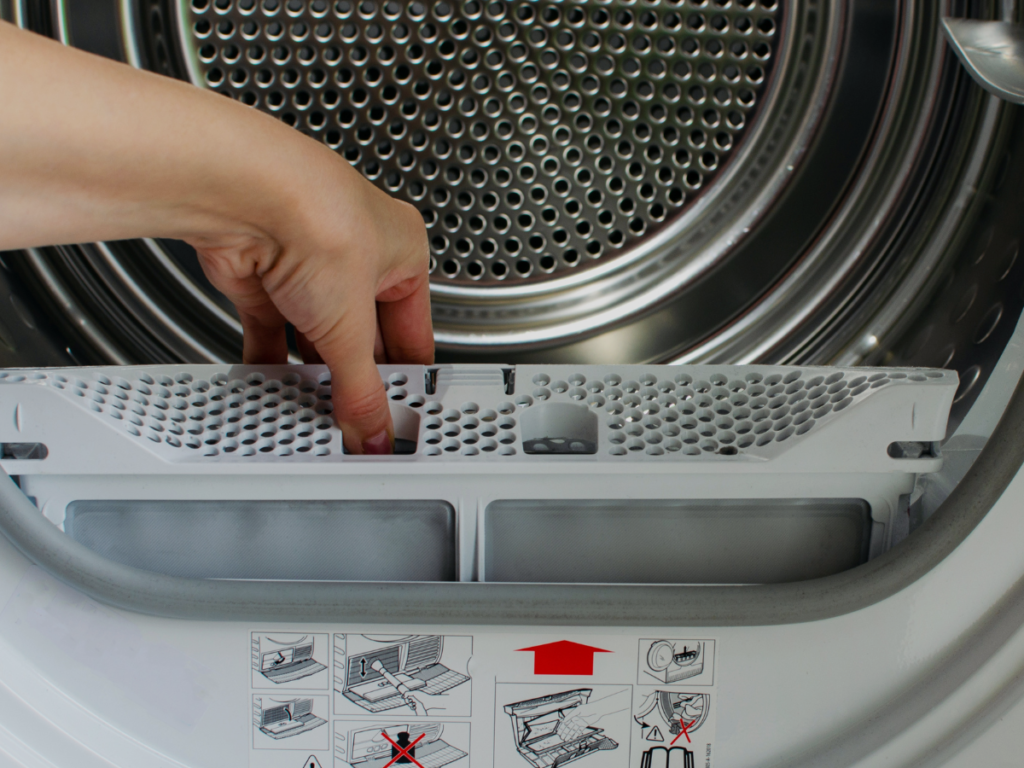
Start with the lint trap after every single load — no exceptions. The lint screen sits inside the dryer door opening on most front load dryer models. Pull it out and peel the collected lint off by hand. This takes under ten seconds and makes a real difference in airflow. Also, cleaning the lint tray in your dryer after every load of laundry is equally important. It greatly improves the dryer’s performance.
Once a month, take the lint filter one step further. Rinse it under warm water and use a soft nylon brush to scrub away residue from dryer sheets. Dryer sheet coating builds up on the screen mesh over time and blocks airflow even when the screen looks clean. Hold the clean lint screen up to the light — if light does not pass through easily, the mesh still needs cleaning. Let it dry completely before sliding it back into the dryer.

How to Clean the Dryer Drum
The dryer drum collects residue from clothes, dryer sheets, and liquid detergent. This residue leaves marks on clean clothes and can cause odours over time. Unplug the dryer from the wall before you begin any interior cleaning.
Dampen a microfiber cloth with warm water and wipe down the entire interior surface of the drum. For stubborn stains or residue marks, add a small amount of liquid detergent to the damp cloth and scrub gently. Rinse the drum with a clean cloth dampened in hot water, then leave the dryer door open and allow the interior to air dry fully before running a cycle. Never spray liquid directly into the drum — moisture reaching the back panel or drum components causes damage.
How to Clean Your Dryer Vent and Dryer Duct
This step matters most for safety. The dryer duct runs from the back of the machine to the outside vent on your home’s exterior wall. Lint and debris collect along the entire length of this duct and restrict airflow over time.
Disconnect the dryer from the wall and pull it away from the wall to access the back panel. Detach the dryer hose from the back of the unit. Use a dryer duct cleaning brush — a long, flexible nylon brush — to reach inside the duct and pull out accumulated lint. Work from both ends if possible: from the back of the dryer and from the outside vent on the exterior wall.
A vacuum with a hose attachment removes loose debris from inside the duct. Some homeowners use a leaf blower to push debris through from the inside to the outside vent — this works well for longer duct runs but creates a mess outside. Once the duct is clear, reattach the hose securely and push the dryer back into position. Reconnect the power and run a short cycle to confirm airflow has improved.
For a gas dryer, do not attempt to disconnect any gas connections yourself. Unplug the electrical cord only. Leave the gas line attached and work around it carefully. If the gas line needs to move to access the duct, call a licensed technician.
How to Clean the Exterior and Moisture Sensor
Wipe down the exterior of the dryer with a damp microfiber cloth to remove dust and residue. Pay attention to the area around the dryer door and the door seal, where lint and debris collect over time. A clean door seal also prevents heat from escaping during a cycle.
The moisture sensor sits inside the drum on most front load dryer models — usually two metal bars near the lint trap opening. This sensor detects moisture in the clothes and tells the dryer when the load is dry. Residue from dryer sheets coats the sensor over time and causes inaccurate readings, leading to overdrying or cycles that end too early. Wipe the sensor bars with a damp microfiber cloth or a small amount of rubbing alcohol on a cloth. This simple step restores accurate drying times and protects your clothes from heat damage.

Warning Signs You Need a Professional
Some dryer problems go beyond what a thorough cleaning can fix. If your dryer takes more than one cycle to dry a normal load even after cleaning the lint trap and duct, a deeper mechanical issue may be at play. A burning smell during a cycle means lint has reached a component it should not. The dryer shutting off mid-cycle points to an overheating issue that cleaning alone will not solve.
If the outside vent flap does not open when the dryer runs, the duct may have a blockage further into the wall that a brush cannot reach. These situations call for a washer and dryer service technician, not more DIY attempts. Searching for appliance repair near me connects you with local professionals who carry the tools and training to clear blocked vents, replace faulty components, and restore full drying performance safely.
Maintenance Tips to Keep Your Dryer Running Well
Clean the lint trap after every load — not every few loads. Schedule a full dryer vent cleaning at least once a year. Large families doing daily laundry should clean the vent every six months. Avoid using too many dryer sheets per load. The coating they leave behind accumulates faster than most people realise and affects both the lint screen and the moisture sensor.
Do not overload the dryer. A packed drum stops clothes from tumbling freely, increases drying times, and causes the motor and heating element to work harder. Keep the area around the outside vent clear of debris, nesting material, and seasonal growth. A blocked exterior vent is a common cause of poor drying efficiency that homeowners rarely check. These habits extend the life of your appliance and prevent fire hazards from developing silently.
Why Choose Toronto Appliance Repairs
Toronto Appliance Repairs serves homeowners and tenants across Toronto with fast, reliable appliance repair and maintenance. The team handles dryer repair, fridge repair, washer and dryer service, oven repair, dishwasher repair, and more — all with the same commitment to quality and honest pricing.
Every technician at Toronto Appliance Repairs is fully trained and experienced across all major appliance brands. The company offers same-day service for urgent jobs, transparent pricing before work begins, and clear communication throughout. There are no hidden fees and no pressure. Fast response times mean you do not wait long when an appliance stops working.
Whether you need a full dryer vent cleaning, a component repair, or help with another home appliance, Toronto Appliance Repairs delivers reliable service across Toronto, North York, Richmond Hill, and the wider Greater Toronto Area. Customer trust sits at the centre of everything the team does — and that trust comes from doing the job right every time.

FAQs
How often should I clean my front load dryer vent?
Clean the lint trap after every load and deep clean the dryer vent at least once a year. If your household runs the dryer daily or you have a large family, clean the vent every six months. A blocked dryer duct is a leading cause of house fires and longer drying times. Regular cleaning prevents both problems and keeps your dryer running at full efficiency without unnecessary wear on the motor or heating element.
Can I clean a dryer vent myself or do I need a professional?
Most homeowners can clean a short, straight dryer duct using a nylon brush and a vacuum. However, longer duct runs, bends in the ductwork, or vents that run through walls or ceilings are harder to clear without professional tools. If your drying times stay long after a DIY clean, or you cannot locate where the blockage sits, call a washer and dryer service technician. A professional clean reaches every section of the duct safely.
Why does my front load dryer take so long to dry clothes?
Long drying times almost always point to restricted airflow. The most common causes are a blocked lint trap, a clogged dryer vent, or a dirty moisture sensor. Check and clean all three before calling for service. If the problem continues after a thorough cleaning, the heating element, thermostat, or blower may need inspection. A dryer technician can diagnose the exact cause and restore normal drying times with a single service visit.
Is lint buildup in a dryer really a fire hazard?
Yes. Lint is highly flammable and accumulates in the dryer duct and around internal components with every load. The U.S. Fire Administration reports that dryers cause thousands of residential fires each year, with lint buildup as the leading cause. A clean lint trap and a clear dryer vent significantly reduce this risk. If you notice a burning smell from your dryer at any point, stop using it immediately and call for appliance repair near me.
Does Toronto Appliance Repairs handle dryer vent cleaning and dryer repair?
Yes. Toronto Appliance Repairs handles dryer vent cleaning, dryer repair, and full washer and dryer service across Toronto and the Greater Toronto Area. The team works on all major appliance brands and models, including front load dryer and tumble dryer units. Whether you need a deep cleaning, a component replacement, or a full dryer inspection, Toronto Appliance Repairs provides fast response times, transparent pricing, and quality work you can count on every time.
Book Your Appliance Repair Today
Do not wait for a blocked vent or a failing dryer to become a bigger problem. Toronto Appliance Repairs is ready to clean, inspect, and repair your front load dryer fast. Book your appointment today and get reliable appliance service from a team Toronto trusts.