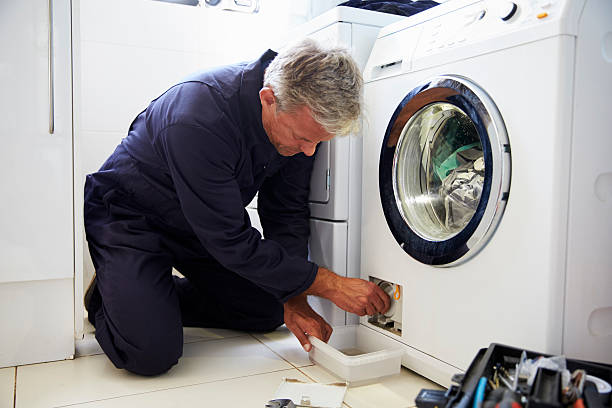
A washing machine frozen during a cold snap in Toronto, Ontario, has ice in its water inlet valve, its drain pump or its hoses, and it should not be run until it has thawed and been checked for cracks. This guide is for homeowners with a washer in an unheated basement, mudroom, garage or exterior-wall laundry closet. It covers where ice forms, how to thaw the machine safely, the mistakes that cause damage and when to call a technician. It matters because a hose that splits in the cold will flood the room as soon as it thaws.
Key Takeaways
- A washing machine freezes when water inside its components turns to ice. The first places are the inlet valve, the drain pump and sump, and the supply and drain hoses.
- Do not run a frozen washing machine. Forcing a cycle can overheat the drain pump motor.
- Cut the power and close the supply taps first, then warm the room gradually.
- Never use boiling water, a heat gun or an open flame. Sudden heat cracks plastic and rubber.
- Inspect the hoses for hairline cracks before a test cycle. If anything leaks or will not drain, call a technician.
Why Washers Freeze in a Toronto Cold Snap
Water freezes at 0°C, and Toronto winters spend long stretches below that. Environment Canada’s climate normals, as published by Statistics Canada, put Toronto’s 1971–2000 average daily temperature at -6.3°C in January and -5.4°C in February. A cold snap pushes well below those averages.
A washer always holds some water after a cycle. In a heated laundry room that does not matter. An unheated installation location can expose a washing machine to freezing temperatures, and inadequate heating in laundry rooms can lead to washing machine freezing even inside the house. The spaces where we see it most are unheated basements, mudrooms, garages and laundry closets built against an exterior wall.
The City of Toronto’s frozen pipe guidance advises keeping areas with water pipes above 8°C. The same figure is a sensible target for the room your washer sits in.
Where Ice Forms First in a Frozen Washing Machine
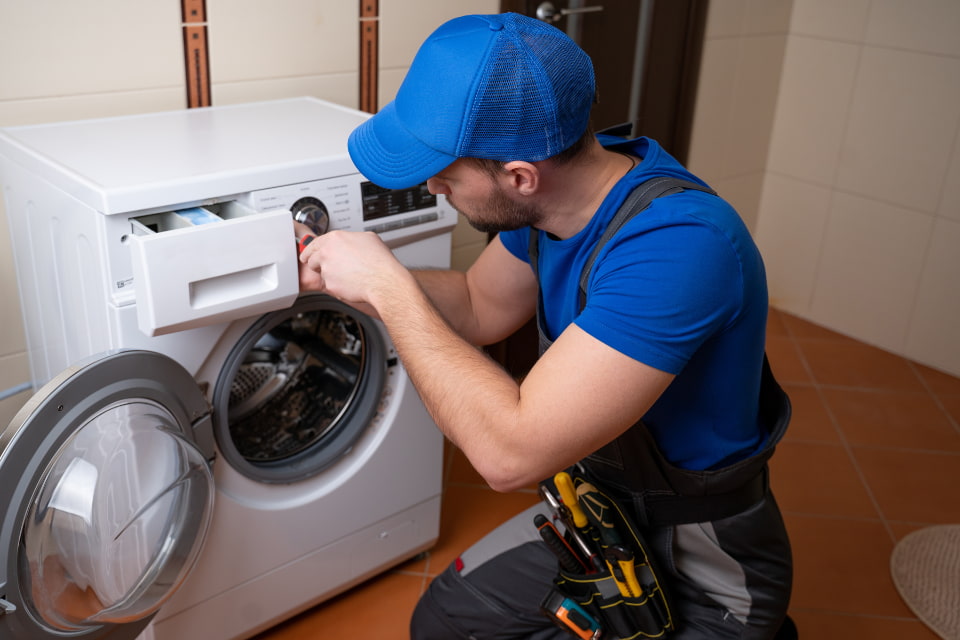
Frozen water can damage hoses and internal components of washing machines. On the calls we attend, ice turns up in three places.
Water Inlet Valve Assembly
The inlet valve sits at the back of the machine where the supply hoses connect, and it controls the flow of hot and cold water into the tub. Water left in the valve body freezes and blocks it. The machine then fills very slowly or not at all. A frozen valve body can also crack, which shows up later as a drip or a steady leak at the back of the machine.
Drain Pump and Lower Sump
The sump is the low point where water collects before the pump pushes it out. Trapped water in the pump can freeze and block the flow in washing machines. When ice locks the pump, the machine cannot drain. A hum with no water movement means the motor is working against ice.
Supply and Drain Hoses
Exposed supply lines can freeze quickly in cold environments, and the drain hose is just as vulnerable where it runs through a cold space. Frozen water can block filling and draining processes in washing machines. Ice also expands, so a hose can split while frozen and give no sign until it thaws.
Signs Your Washing Machine Is Frozen
- The machine fills very slowly or not at all.
- Water from the last cycle will not drain.
- The pump hums but nothing moves.
- Hoses feel stiff, or you can see frost on them or on the back of the machine.
- The display shows a water supply or drain error. Modern washers may display error codes for freezing issues, and the owner’s manual lists what each code means.
Visible frost indicates a frozen washing machine drain or supply line. If you see it, stop and thaw before you try another cycle.
How to Thaw a Frozen Washing Machine Safely
The order matters as much as the method.
Step 1: Cut Power and Close the Water Supply
Switch the machine off and unplug it. Close both supply taps at the wall. If a hose or valve has cracked, it will only leak once the ice melts and the pressure returns. Closing the taps first means a crack shows up as a drip and not as a flood.
Step 2: Warm the Room Gradually
Raise the temperature of the space and let the machine thaw with it. Turn up the heat, open the door to a heated part of the house, or use an electric space heater placed well away from the machine and never left unattended. Heating the room can help prevent internal blockages in washing machines from refreezing while you work.
For frozen pipes, the City of Toronto recommends a heating pad, a hair dryer or warm towels, and warns never to use a blowtorch, a propane heater or any open flame. The same rules apply to washer hoses:
- Use a hair dryer on low heat on the supply hoses, and keep it moving.
- Using warm towels around frozen hoses aids in thawing without damage.
- Do not leave any heating device unattended.
The City notes that thawing a pipe can take one to six hours. Expect a similar wait for a washer in a cold room. Thawing methods for frozen machines should avoid any high thermal shock, so slow is correct.
Step 3: Inspect Before a Test Cycle
Once everything has thawed, run a hand along each hose and look for splits, soft spots or damp patches. Check the floor under the machine. Then open the supply taps and watch every connection for drips before you plug the machine back in.
Testing the machine involves ensuring water successfully enters and drains properly. Run a short cycle with no laundry and stay with it. If water appears anywhere it should not, close the taps and stop.
Mistakes That Make a Frozen Washing Machine Worse
Three mistakes cause most of the avoidable damage we see.
- Forcing the machine to run while frozen. The drain pump motor works against the ice and can overheat and fail.
- Applying extreme direct heat. Using boiling water can crack plastic tubs or hoses in a washing machine, and a heat gun does the same to seals. A hose that survived the freeze can fail in the thaw.
- Leaving the water supply on. A cracked hose under full pressure floods a laundry room quickly once the ice lets go.
How to Prevent Freezing Next Time
Frozen washers are an installation problem as much as a maintenance problem. The lasting fix is heat and insulation.
- Maintaining ambient heat in the laundry area helps prevent freezing. Keep the room above 8°C.
- Insulating supply pipes can prevent washing machine freezing. Inadequate pipe insulation leads to frozen water supply pipes during cold weather, and the City of Toronto recommends insulating exposed pipes in basements, crawl spaces, garages and attics.
- Wash regularly through cold months. Running the machine infrequently during winter can lead to stagnant water freezing.
- Run a spin cycle to drain water before vacations, and close the supply taps while you are away.
- Leaving the washing machine door slightly open after use helps moisture escape.
- Checking for leaks should be part of regular washing machine maintenance, especially after a cold snap.
If a washer has to sit unused in an unheated space all winter, ask a technician to winterize it. Draining the pump and valve properly is not a job to guess at.
When to Call a Technician
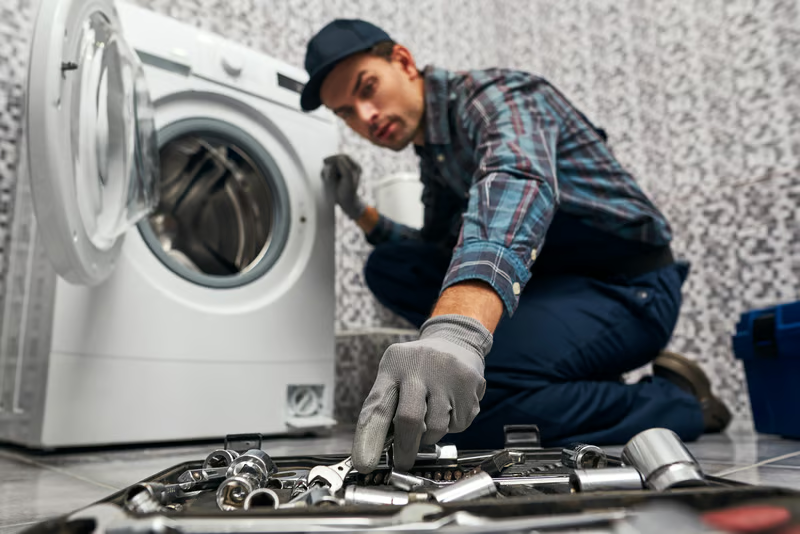
Warming the room, thawing the hoses from the outside and running a test cycle are safe for a homeowner. Stop and book a service call when:
- The machine will not fill or drain after it has fully thawed
- Water leaks from a hose, a connection or under the machine
- The pump hums without draining
- A hose shows a crack or a soft spot
- An error code stays on after a restart
A cracked inlet valve or a failed drain pump needs a replacement part, and thawing again will not fix it. Toronto Appliance Repairs provides washer repair in Toronto 24 hours a day, 7 days a week, with a 90-day warranty on repairs.
Frequently Asked Questions
Why is my washing machine frozen?
A washing machine freezes when water left in the inlet valve, drain pump or hoses turns to ice. It happens when the machine sits in an unheated space, such as a basement, garage or exterior-wall laundry closet, and the room falls below 0°C. Running the machine infrequently in winter leaves standing water in the parts most likely to freeze.
Can I use a hair dryer on a frozen washing machine?
Yes, on the outside only. Use a hair dryer on low heat on the supply hoses and the area around the inlet valve, and keep it moving so no spot overheats. Do not aim it inside the cabinet, and do not leave it unattended. Warming the whole room is the gentler method for the pump and the tub.
How do I know if my washing machine pipes are frozen?
Frozen washing machine pipes show up as a machine that will not fill, fills very slowly or will not drain. Look for frost on the hoses and feel along them for hard, icy sections. If the taps elsewhere in the house have also slowed, the frozen pipes may be in the home’s plumbing and not the washer.
Can I pour hot water on a frozen drain hose?
No. Pouring hot water over a frozen drain hose or into the machine risks cracking cold plastic and rubber through thermal shock, and boiling water is the worst case. Warm the room, wrap the hose in warm towels and give it time. The City of Toronto says thawing a frozen pipe can take one to six hours.
Book Washer Repair in Toronto
If the machine still will not fill or drain after thawing, or you found a cracked hose or a leak, get it diagnosed before the next cycle. Toronto Appliance Repairs offers washer repair in Toronto 24 hours a day, 7 days a week, with a 90-day warranty on repairs.
Call 416-918-2700 to book.