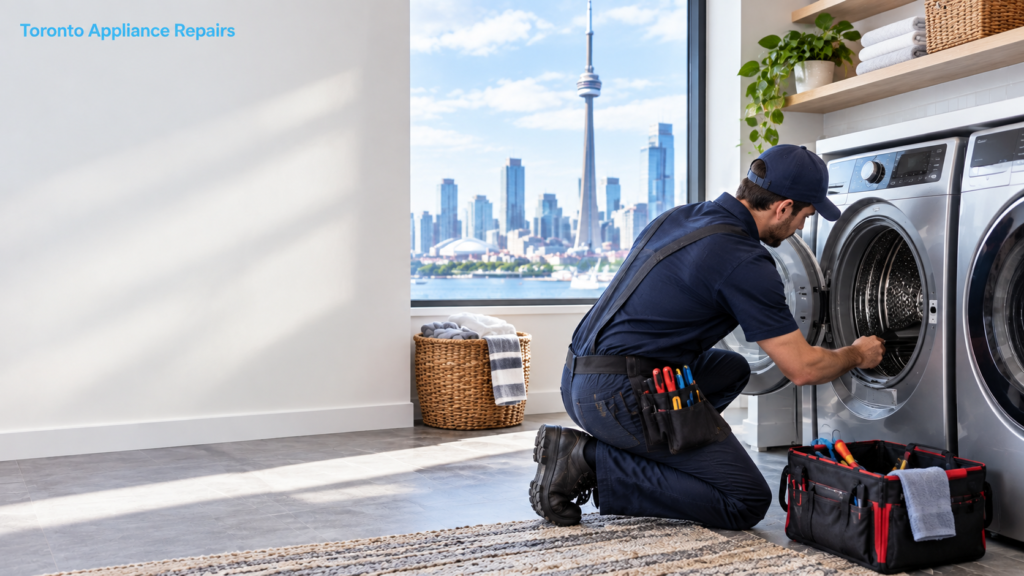
Most washer and dryer breakdowns in Ontario trace back to skipped maintenance, not faulty machines. A consistent schedule — cleaning the lint screen, inspecting hoses, and running monthly washer cycles — prevents the majority of repair calls. Toronto Appliance Repairs put together this guide for homeowners who want their laundry appliances to run reliably for a full 10 to 15 years.
Key takeaways
- Dryer lint buildup is a leading cause of residential fires in Canada — cleaning the lint screen after every load is the single most important dryer maintenance step.
- A clogged dryer vent can increase energy usage by up to 30% without producing any obvious sign of a problem until drying times visibly lengthen.
- Washing machine hoses should be inspected every six months and replaced every five years to prevent burst hose flooding.
- Running a clean washer cycle every 30 wash loads removes detergent buildup and residue before it causes odours or seal damage.
- Most repair calls Toronto Appliance Repairs receives for laundry appliances in Toronto involve a maintenance step that was skipped for over a year.
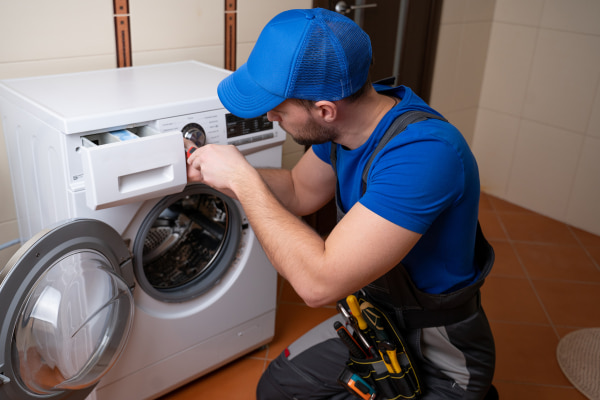
How long each one lasts
| Task | Frequency | What it prevents |
|---|---|---|
| Clean lint screen | After every load | Dryer fires, longer drying times |
| Wipe washer door seal | Weekly (front-load) | Mould and drum odours |
| Run washer cleaning cycle | Monthly / every 30 loads | Detergent buildup, residue odours |
| Inspect washer hoses | Every 6 months | Leaks, water damage to floors |
| Deep clean lint screen | Every 6 months | Restricted airflow, overheating |
| Inspect dryer vent | Every 6 months | Fire risk, reduced efficiency |
| Clean dryer vent duct | Annually | Fire hazard, 30% energy waste |
| Replace washer hoses | Every 5 years | Catastrophic burst and flooding |
This is the dryer maintenance checklist most appliance technicians work from on every preventive service call.
The tasks at the top take under two minutes. The ones at the bottom take under an hour, once a year.
Regular maintenance improves washer and dryer efficiency and extends lifespan — the goal is to make each task a habit before a fault forces the issue. For appliance repair in Toronto when maintenance alone is not enough, same-day diagnostics are available across the city.
The maintenance that actually extends life
Working through these tasks in order is what separates a washer and dryer that runs 15 years from one that needs repairs at year seven.
Monthly
Clean the lint screen after every load.
This is the one step most homeowners do already.
Clogged lint screens can cause longer drying times and put unnecessary strain on the dryer motor. Inspect the lint screen every load for optimal airflow — a clean screen is the baseline for everything else.
Run a washer cleaning cycle.
Run a cleaning cycle every 30 wash cycles, which works out to roughly once a month for most Ontario households.
Use a dedicated washing machine cleaner or run a hot water setting cycle with white vinegar if you prefer.
This removes laundry detergent buildup and residue buildup that accumulate inside the drum, door seals, and dispenser drawer even when you cannot see them.
Wipe the door seal on front-load washers.
Use a damp cloth after the last load of the day.
Check the rubber fold for moisture, lint, or debris.
A soft cloth is enough for routine wipes. For residue buildup, warm soapy water and a second pass with a clean damp cloth will clear it.
Leave the washer door open after every cycle.
This single step prevents mould and odours in front-load washers more effectively than any cleaning product.
Remove damp laundry from the drum as soon as the cycle ends.
Avoid overloading the washer and dryer.
Large loads reduce cleaning efficiency and force the drum to work harder than it was designed to.
Avoid overloading — it causes excessive vibration, wears down drum bearings, and shortens the machine’s working life. Keep loads within the marked fill line.
Every six months
Inspect washer hoses.
Pull the washing machine away from the wall and check both water supply hoses for cracks, bulges, or moisture near the fittings.
Inspect hoses every six months for visible wear, and replace them every five years regardless of condition. A hose that feels soft or shows surface cracking should be replaced before it fails.
Deep clean the lint screen.
Remove the lint screen and wash it in warm soapy water using a soft brush.
Deep clean the lint screen every six months to remove the fine fabric softener film that daily lint removal misses.
A clean lint screen improves dryer efficiency and reduces energy use — a coated screen restricts airflow even when no visible lint is present.
Inspect the dryer vent for blockages.
Run a load and check the exterior vent flap for steady airflow.
If airflow feels weak or the vent flap barely moves, there is a blockage somewhere in the duct between the dryer and the outside wall.
Inspect dryer vents at least twice a year for lint buildup. For homeowners dealing with recurring issues, the guide on avoiding frequent washer and dryer repair calls covers the full pattern of preventable faults.
Clean the door seals thoroughly.
Front-load washer door seals require a thorough cleaning every six months.
Use a damp cloth with mild soap and work through the entire rubber gasket fold.
Wipe down the rubber door seal on front-load washers regularly to prevent mould from establishing in the folds where damp air is trapped after each cycle.
The task most people skip
The dryer vent duct is the task most homeowners skip.
Most people clean the lint trap after every load — as they should — but never address the duct running from the back of the dryer to the exterior wall.
Lint accumulates in that duct over months and years.
Dryer lint buildup is a leading cause of residential fires in Canada. A clogged dryer vent can increase energy usage by up to 30% at the same time, so the cost shows up on utility bills before anything else.
Clean the dryer vent duct at least once a year to maintain airflow and reduce fire risk.
What it costs to skip it
Professional dryer vent duct cleaning runs $80 to $150 CAD in Toronto, depending on duct length and access.
That cost compares against the consequences of a lint fire, a dryer motor failure from sustained overheating, or a utility bill that has climbed 30% without a clear cause.
How to tell it was skipped
Clothes take two full drying cycles to come out dry, or the dryer drum feels hot on the outside of the cabinet after a single normal cycle.
Annually
Clean the dryer vent duct.
Disconnect the duct from the back of the dryer and vacuum out lint from both ends.
Use a long dryer vent brush to clear the full length of the duct if you cannot see through it. Check and clean the exhaust vent and duct to prevent fire hazards and maintain airflow.
Pull the machines away from the wall.
Vacuum behind and underneath both the washer and dryer once a year.
Keep the area around the washer and dryer clean and dry to prevent moisture buildup and debris accumulation near electrical components.
Check the vent hose for kinks or damage.
Replace a kinked or crushed vent hose immediately.
A damaged vent hose restricts airflow as effectively as a lint clog and is one of the most overlooked causes of longer drying times on otherwise healthy machines.
Inspect and replace washer hoses if needed.
Inspect and replace hoses every few years to prevent leaks and failures. Rubber hoses older than five years should be replaced regardless of appearance. Braided stainless-steel hoses are a better long-term option for Ontario homes.

Signs it is near the end
Some symptoms signal a maintenance gap. Others signal the appliance is reaching end of life.
Clothes take two cycles to dry despite a clean lint screen. This points to a duct blockage or a failing heating element.
Water pools under the washing machine. A small drip from a hose fitting is repairable. A crack in the drum or tub usually is not cost-effective to fix on a machine over 10 years old.
Loud banging during the spin cycle. Worn drum bearings or a failed shock absorber. Repairable if caught early, but a sign the machine has been running unbalanced for some time.
Burning smell from the dryer drum. Stop the machine immediately. This is a lint blockage or a failing heating element until proven otherwise.
Visible rust on the drum interior. Surface rust can be addressed with a thorough cleaning and rust-prevention coating. Deep pitting or flaking rust transfers to clothing and signals replacement.
Mould smell that persists after deep cleaning the door seal. On a front-load washer, persistent odour after a thorough cleaning and multiple clean cycles usually means mould has penetrated the drum gasket or the tub itself.
The machine shakes the floor or walks across the room. Keep the washer and dryer level to prevent excessive vibration and wear. If re-levelling does not resolve it, the suspension system is failing.
Repair or replace: the cost crossover
The 50-percent rule applies to laundry appliances as it does to any major appliance: if the repair estimate exceeds 50 percent of the cost of a comparable new unit, replacement is usually the stronger financial decision.
| Fault | Typical repair cost (CAD) | Worth repairing? |
|---|---|---|
| Clogged dryer vent duct | $80 – $150 | Yes — always |
| Worn door seal | $120 – $200 | Yes (under 8 yrs) |
| Drum belt or idler pulley | $150 – $250 | Yes (under 8 yrs) |
| Heating element | $150 – $300 | Yes (under 8 yrs) |
| Control board | $200 – $500 | Case by case |
| Drum bearing replacement | $250 – $450 | Yes (under 7 yrs) |
| Cracked drum or tub | $300 – $600+ | Rarely |
A new mid-range washer or dryer in Canada costs $700 to $1,500 CAD.
On a machine under seven years old with a single fault, repair almost always wins. On a machine over 12 years old with a second fault, replacement usually does.
For brand-specific guidance on dryer repairs, the guides on LG dryer repair and GE dryer repair cover the most common faults and cost ranges for each brand. For older combination units, the guide on repairing a Kenmore washer dryer combo addresses the specific failure points on those models.
What Toronto Appliance Repair sees most in Toronto
The most common repair call Toronto Appliance Repairs receives for laundry appliances comes down to three root causes, all of which are preventable.
Blocked dryer vents on machines under five years old. A dryer that was never once vented properly after installation — an unlevel machine, a kinked duct, or an exhaust routed too close to a wall — builds lint resistance faster than normal. The homeowner notices longer drying times but attributes it to the machine rather than the installation.
Detergent buildup on front-load washers. Using liquid detergent in excess, or using a non-HE detergent in a high-efficiency machine, creates residue buildup on the door seal and drum gasket within two years. The smell is the first complaint. The seal damage comes after.
Hose failures on machines over seven years old. Washing machine hoses are the component that gets the least attention and causes the most water damage when they fail. Most homeowners replace the hose after a leak, not before.
For appliance repair in Toronto when one of these faults has already developed, Toronto Appliance Repairs technicians diagnose the exact cause on the same visit, with upfront pricing before any work begins.
Frequently asked questions
How often should I clean the lint filter in my dryer?
Clean the lint filter after every single load without exception. A full lint screen restricts airflow and forces the dryer to run longer, increasing energy use and heat buildup. Deep clean the lint screen every six months using warm soapy water to remove the fabric softener film that daily cleaning does not catch. A clean lint screen improves dryer efficiency significantly.
How do I know if my dryer vent is clogged?
The clearest sign is clothes that take two full cycles to dry despite a clean lint screen. Other signs include a dryer drum that is hot to the touch on the outside of the cabinet, a musty smell from the vent exterior, or an exhaust flap that barely moves during a cycle. Inspect dryer vents at least twice a year and clean the duct annually.
What does a dryer maintenance checklist include?
A standard dryer maintenance checklist covers: cleaning the lint trap after every load, deep cleaning the lint screen every six months, inspecting the vent for blockages every six months, cleaning the vent duct annually, checking the vent hose for kinks, and cleaning the dryer drum interior with a damp cloth periodically. Most of these steps take under five minutes each.
Should I avoid overloading my washer and dryer to prevent repairs?
Yes. Avoid overloading the washer and dryer — oversized loads cause excessive vibration that wears down drum bearings, shock absorbers, and suspension rods over time. They also reduce cleaning efficiency in the washer and airflow in the dryer, which means clothes come out less clean and take longer to dry. Stay within the fill line marked inside the drum.
About Toronto Appliance Repair
Toronto Appliance Repair serves Ontario homeowners with washer and dryer repair, refrigerator repair, dishwasher repair, oven repair, and full appliance service across Toronto and surrounding areas.
The team of certified technicians diagnoses the exact fault on the same visit, carries common replacement parts for major brands, and provides upfront pricing before any work begins. No hidden fees.
For appliance repair in Toronto on any major laundry appliance, Toronto Appliance Repairs offers same-day appointments with honest pricing on every call.
Service area
Toronto Appliance Repairs provides washer and dryer repair and full appliance service across Toronto and surrounding municipalities, including North York, East York, Scarborough, Etobicoke, Mississauga, Richmond Hill, and Markham.
Contact Toronto Appliance Repairs to confirm same-day availability in your area before booking.
Next step
Book appliance repair in Toronto with Toronto Appliance Repairs today.
A technician arrives with common replacement parts, diagnoses the exact fault on the same visit, and provides a repair quote before any work begins. No hidden fees.
For a full list of appliance repair services across Toronto and surrounding areas, visit Toronto Appliance Repairs services.