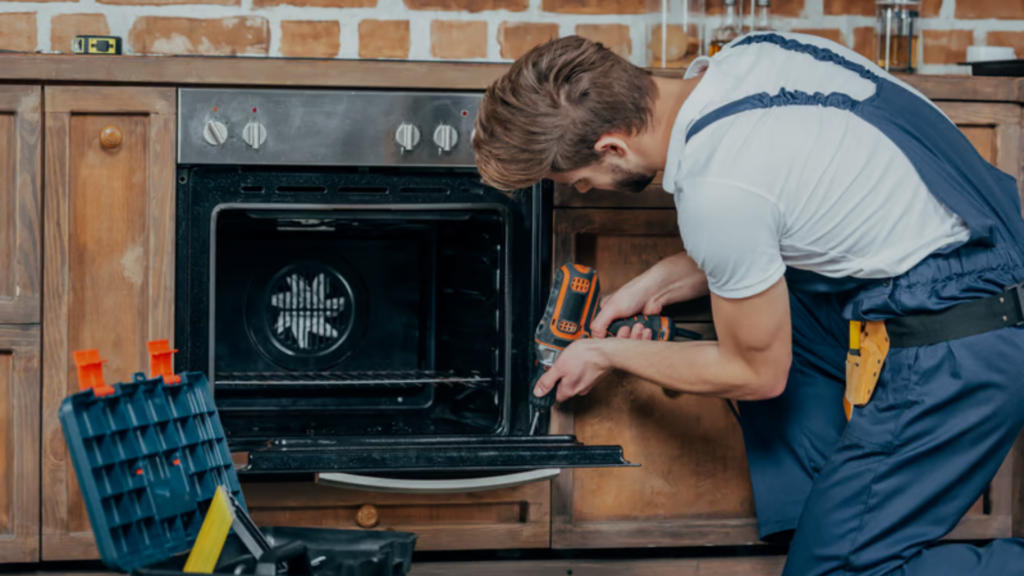
Your oven is supposed to heat up. That is literally its one job. But here you are — burnt edges, raw middles, and a roast that looks like it was cooked by someone who gave up halfway through. Before you start pricing out new ranges, take a breath. An oven not heating evenly is one of the most common appliance complaints in Canada, and in many cases, it is a fixable problem that does not cost a fortune. This guide will tell you exactly what is wrong and what to do about it.
The Direct Answer: Why Is Your Oven Not Heating Evenly?
Uneven heating in an oven typically comes down to three possible reasons, ranked by how often they actually occur:
- A failing baking element or faulty ignitor — the most common cause in electric and gas ovens respectively. Dirty ignitors simply need gentle cleaning to remove any buildup. Model-specific cleaning instructions can be found in your appliance care guide. If there is no buildup on the ignitor, it may be faulty and will need to be replaced by a licensed technician.
- A malfunctioning temperature sensor — causes the oven to read the wrong internal temperature and cycle heat incorrectly
- A broken oven door seal or hinge — hot air escapes, cold spots form, and your food pays the price
One of these three is almost certainly your culprit. Read on to find out which one.

Breaking Down the Causes: What Is Actually Going Wrong Inside Your Oven
1. Failing Heating Element or Faulty Ignitor
In an electric oven, the baking element sits at the bottom of the oven cavity and should glow red when the oven is operating at the set temperature. If it does not glow red along its entire length — or if you notice visible cracks, blisters, or a hole in the thin tube — the element is partially or fully failed. A broken baking element cannot distribute heat evenly across the oven floor, which is why one side of your pan browns while the other stays pale.
In a gas oven, the equivalent component is the faulty ignitor. The ignitor does two jobs: it creates the spark that lights the gas, and it signals the gas valve to open. A weak ignitor may still light the burner, but it takes longer, the flame is inconsistent, and the oven never reaches or holds the proper temperature. If your gas oven is slow to heat or the flame looks uneven, a faulty ignitor is the first thing a licensed technician will check.
Repair cost in Canada: Heating element replacement typically runs $150–$300 CAD including parts and labour. Ignitor replacement is similar, around $180–$280 CAD.
2. Malfunctioning Temperature Sensor
The temperature sensor is a thin probe, usually mounted at the back of the oven cavity, that tells the control board what the actual internal temperature is. If the sensor is reading inaccurately — either because it has shifted out of proper position or because the sensor itself has failed — the oven will cycle the heating element or gas burner on and off at the wrong times. The result: the oven overshoots or undershoots the set temperature, and your cooking becomes unpredictable.
You can sometimes confirm a sensor issue by placing an independent oven thermometer inside and comparing its reading to the display. A difference of more than 25°F (14°C) points to a sensor or calibration problem.
Repair cost in Canada: Sensor replacement runs $120–$220 CAD. Calibration adjustments, if available on your model, can sometimes be done by the homeowner via the owner’s manual — but only if the underlying sensor is still functional.
3. Broken Oven Door Seal or Failed Door Hinge
This one is easy to overlook. The rubber gasket around the oven door keeps hot air inside the oven cavity where it belongs. If the seal is cracked, torn, or compressed flat, heat escapes around the door constantly. The oven works harder, runs longer, and still cannot maintain even temperature — especially near the front of the oven.
A failed door hinge can also prevent the door from closing flush, creating the same problem. Check the gasket by running your hand slowly along the door edge while the oven is on. If you feel heat escaping, you have found your issue.
Repair cost in Canada: Door gasket replacement is $80–$160 CAD. Hinge repair or replacement runs $150–$250 CAD depending on the model.
When to Call a Professional vs. When You Can DIY
Safe for Most Homeowners
- Checking and replacing a door gasket — no electrical connection required, the part is inexpensive, and installation is usually a matter of pressing the new seal into the door groove
- Running a temperature calibration via the control panel, if your model supports it (check your owner’s manual or product manual)
- Resetting a tripped circuit breaker — if your electric oven went completely dead, double check your panel first before calling anyone
Call a Licensed Technician or Licensed Electrician
- Heating element replacement — involves working near a dedicated circuit and live electrical connections; not a safe DIY job
- Ignitor or gas valve work on a gas oven — gas components require a licensed technician; this is non-negotiable in Canada
- Temperature sensor replacement — while not dangerous, improper installation leaves the oven’s functionality compromised and can trigger error codes
- Broil elements and convection fan repairs — these involve accessing internal wiring and should be handled professionally
Brand and Age Considerations for Canadian Homeowners
Brands that hold up well: Bosch, Miele, and LG tend to have reliable temperature sensors and door components. Brands with expensive replacement parts: Viking and Thermador look great but cost significantly more to repair — sometimes $400–$600 CAD for a single component.
Age threshold for ovens: The average oven lifespan is 13–15 years. Apply the 50% rule: if the repair cost exceeds 50% of the current replacement cost (typically $900–$2,500 CAD for a new range in Canada), replace it. An oven under 8 years old is almost always worth repairing.
Quick Troubleshooting Checklist for Canadian Homeowners
Before calling anyone, run through this checklist. Many oven problems have simple causes that are fully covered by a five-minute inspection — no tools required.
Power and electrical system basics
- Check the wall outlet and dedicated circuit. Electric ranges in Canada require a 240V outlet on a dedicated circuit. If the oven has no power at all, go to your breaker panel first. A tripped breaker or a blown fuse is often the reason a unit appears completely dead. Reset the breaker, wait 60 seconds, and try again.
- Confirm the oven is fully plugged in. It sounds obvious, but ranges get shifted during cleaning. A loose connection at the wall reduces voltage to the unit, which causes inconsistent heating and can mimic a failed heating element.
- Look for an icon error or fault code on the display. Most ovens made in the last decade will show a number or error code when a system fault is detected. Note that code and search it with your model number — or email it to us directly using the email icon on our contact page. Model-specific information makes diagnosis much faster.
Airflow, bakeware, and cooking setup
- Do not block oven vents. Every oven relies on internal airflow to distribute heat evenly through the oven cavity. Oversized bakeware — pans that are too wide or tall — can obstruct this airflow and create hot and cold zones that have nothing to do with a faulty component. Check that your bakeware fits with at least one inch of clearance on each side.
- Use the right rack position. Hot air rises, so the upper portion of the oven runs hotter than the lower. For even baking, centre rack is the default. Consult your owner’s manual for model-specific rack guidance on select models with convection features.
- Consider energy use and preheating time. If your oven is slow to reach temperature, it may be losing energy through a failed door seal or operating on reduced voltage from a loose wall connection. Both are fixable without replacing the unit.

FAQ: Possible Reasons Your Oven Is Not Heating Properly
Why is my oven not heating to the correct temperature?
The most common possible reasons are a failing temperature sensor, a damaged baking element, or a faulty ignitor in a gas oven. Start by testing with a standalone oven thermometer to confirm whether the displayed temperature matches the actual heat inside. If there is a significant gap, the sensor is the likely culprit. A licensed technician can test the sensor’s resistance with a multimeter to confirm before replacing it — costing you less in unnecessary parts.
How do I know if my oven’s heating element needs to be replaced?
On an electric oven, turn the oven on and watch the baking element at the bottom. It should glow red uniformly across its entire length within a few minutes. If it glows only partially, or if you can see visible damage like a crack, burn mark, or hole in the thin tube, the element needs replacing. Do not continue using a damaged element — it can cause tripped circuit breaker events or, in rare cases, electrical arcing inside the oven cavity.
Can a faulty ignitor cause uneven heating in a gas oven?
Yes — and it is one of the most overlooked possible reasons for poor gas oven performance. A weak ignitor takes longer to signal the gas valve to open, which means the oven takes longer to reach the set temperature. It may also cause the burner to cycle off prematurely, leaving the oven cooler than expected. If your gas oven is slow to preheat, takes longer than usual, or the flame looks inconsistent, have a licensed technician inspect the ignitor before anything else.
Is it worth repairing an oven that is not heating evenly, or should I just replace it?
More tips on this: apply the 50% rule. If your oven is under 8 years old and the repair costs less than half the price of a comparable new unit, repair it. Most even-heating issues — a baking element, temperature sensor, or oven door seal — fall well under that threshold at $150–$300 CAD. If the oven is over 12 years old and needs multiple components, or if it is a high-end brand with expensive parts, replacement becomes the more article-helpful financial decision for the long term.
The Bottom Line: One Clear Next Step
If your oven is not heating evenly, start by checking the baking element or ignitor, then test the temperature sensor with an independent thermometer. Door seals are easy and cheap to replace yourself. Everything else — gas components, electrical connections, control boards — belongs in the hands of a licensed technician.
Toronto Appliance Repairs serves the GTA and can diagnose your oven issue the same day. Call before you buy a new appliance.