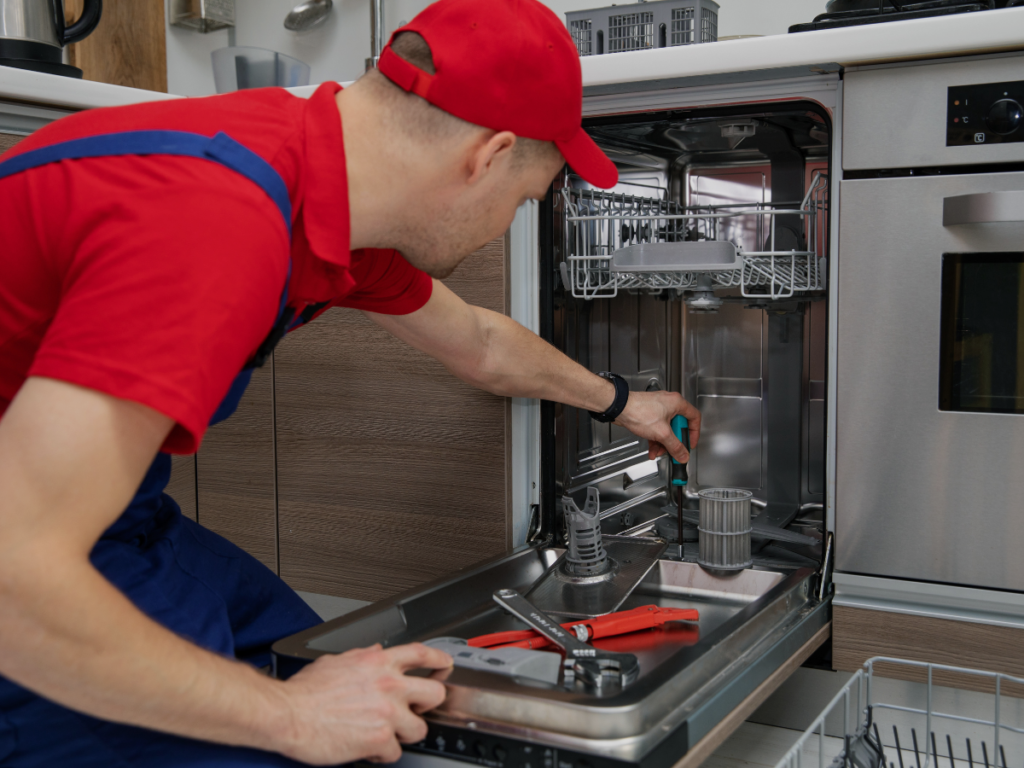
Installing a dishwasher involves plumbing, electrical connections, and precise fitting inside a cabinet opening. One wrong step causes leaks, electrical faults, or damage to your floors and countertops. Many Toronto homeowners attempt this job without prior experience and run into problems fast. Whether you are replacing an old dishwasher or setting up a new dishwasher for the first time, this step by step guide covers what you need to know — and when to stop and call a professional.
What You Need Before You Start
Check your dishwasher installation location before you buy anything. Measure the cabinet opening carefully. A standard dishwasher fits a 24-inch space. Confirm the new dishwasher matches that size for a proper fit. Not all new dishwashers come with a fill hose or drain hose. Check what additional parts your model needs before your purchase.
Read the owner’s manual for your specific model. Every dishwasher has different connection points. The manual tells you where the drain port, terminal box, and leveling legs sit on your unit. Gather your supplies before you begin — a water supply line, fill hose, drain hose, power cord or hard wiring materials, anchor brackets, screws, a bucket, a towel, a level, and basic hand tools.
How to Remove the Current Dishwasher
If you have a current dishwasher in place, remove it first. Turn off the water supply valve under the sink and flip the circuit breaker to cut electrical power to the unit. Remove the toe panel at the bottom front by taking out the screws. Place a towel and bucket under the rear connections to catch any water.
Once you’ve turned off the water and electricity, unplug the dishwasher and disconnect the drain hose and water supply lines. Remove the anchor brackets that hold the unit to the countertop or cabinet. Adjust the leveling legs to lower the dishwasher, then carefully pull it out. Slide wood runners under the unit to protect your floor during removal. Before the new dishwasher goes in, inspect the cabinet opening for damage or mold. Clean and dry the area fully.

How to Connect the Water Supply
The hot water line connects the dishwasher to your home’s water supply. This connection runs from the shut off valve under the sink. Attach the drain hose to the drain port, then route it and the power cord underneath the rear legs of the dishwasher. Save wood runners from packaging if you need to build up floors underneath the dishwasher. Hand-tighten the fittings, then add one more quarter turn with a wrench. Do not overtighten — this cracks the fitting and causes leaks. Use the dishwasher collar or fitting included with your unit, and keep the water supply valve in the off position until all connections are complete.
How to Connect the Drain Hose
The drain hose connects the dishwasher to the existing plumbing under the sink — either to the drain inlet on the garbage disposal or directly to the sink drain. Run the hose from the rear of the unit toward the drain connection under the sink. Loop the hose high, at or near the top edge of the cabinet interior. This high loop stops backflow from re-entering the dishwasher during a wash cycle. Secure the loop with a clip or tie, then connect the end of the drain hose to the drain port. Tighten the clamp firmly. Skipping the high loop is one of the most common installation mistakes and leads to dirty water flooding back into the unit.
How to Handle the Electrical Connection
A dishwasher needs a dedicated 120-volt circuit. Do not share this circuit with other appliances. If your model uses a power cord, run it underneath the cabinet and plug it into the grounded outlet under the sink. If your model requires hard wiring, access the terminal box behind the access panel at the front of the unit. Connect black wire to black, white wire to white, and the ground wire to the green screw. Secure all connections and replace the access panel cover.
If you are not confident with electrical work, stop here. Call a licensed electrician or professional appliance installer. A wrong connection causes fires or electric shock. This is not a step to guess on, regardless of how many tutorials you have watched.

How to Level and Secure the New Dishwasher
Slide the unit into the cabinet opening carefully. Adjust the leveling legs at the front and rear until the unit sits level. Use a bubble level across the top edge of the door to confirm. A level dishwasher drains properly and does not rock during operation. Secure the anchor brackets to the underside of the countertop or to the cabinet sides using the screws provided. Replace the toe panel once the unit sits firm. Confirm the drip tray sits flat and the unit does not shift when you open and close the door.
Run a Test Cycle
Before you load any dishes, run a test cycle. Turn the water supply valve back on and flip the circuit breaker to restore electrical power. Run a short wash cycle and watch all connections under the sink closely. Check the drain hose connection and the fill hose fitting for drips. Open the dishwasher mid-cycle and inspect the interior for pooling water or spray issues. If you see leaks or the unit does not drain, stop the cycle immediately. Turn off the water and power, then call for dishwasher repair rather than forcing the unit to continue.
Why Choose Toronto Appliance Repairs
Toronto Appliance Repairs handles dishwasher installation, repair, and maintenance for homeowners and tenants across Toronto. The team also covers fridge repair, oven repair, washer and dryer service, and more — all under one roof.
Every technician at Toronto Appliance Repairs is experienced, licensed, and trained across all major appliance brands. The team offers same-day service for urgent jobs, so you never wait long with a broken appliance. Work gets done right the first time, backed by transparent pricing and no hidden fees. Customers receive an honest quote before work begins — no surprises.
Toronto Appliance Repairs serves Toronto, North York, and Richmond Hill. Whether you need a new dishwasher set up, an existing one repaired, or help with fridge repair or oven repair, the team delivers reliable service every time. Customer trust sits at the centre of everything Toronto Appliance Repairs does.

FAQs
Can I install a dishwasher myself without prior experience?
You can attempt a basic dishwasher installation if you have some plumbing and electrical knowledge. However, the electrical connection — especially hard wiring — carries real risk without experience. A wrong connection causes electric shock or fire. The plumbing connections also need to be exact to prevent leaks and backflow. If any step feels unclear, call a professional installer. Getting it right the first time saves money and protects your home.
How long does it take to install a dishwasher?
A straightforward dishwasher installation with existing plumbing and a power cord takes about one to two hours. Replacing an old dishwasher adds time for removal and cleanup. Hard wiring connections take longer and need a licensed technician. If you run into fitting issues with the cabinet opening or need additional parts, the job can extend further. A professional technician completes the full installation faster, with no guesswork and no callbacks.
What are the most common dishwasher installation mistakes?
The most common dishwasher installation mistake is skipping the high loop in the drain hose, which allows backflow into the unit. Other issues include overtightening the fill hose and cracking the fitting, failing to shut off the water supply valve before disconnecting existing plumbing, and connecting the dishwasher to a shared circuit instead of a dedicated one. These mistakes cause leaks, water damage, and electrical faults that require professional dishwasher repair to fix properly.
Do I need a plumber to install a dishwasher in Toronto?
You do not always need a licensed plumber for a standard dishwasher installation if you have prior experience with plumbing connections. However, if your home’s existing plumbing needs modification or you are creating a new installation location without an existing water supply line, a plumber is required. For electrical hard wiring, a licensed electrician or certified appliance technician handles the connection safely and to code in Toronto.
When should I repair my dishwasher instead of replacing it?
If your current dishwasher is under 10 years old and the repair cost sits under half the price of a new unit, repair makes more sense. Common repairable issues include a faulty drain hose, a broken door seal, a clogged filter, or a failed pump. Toronto Appliance Repairs technicians assess your appliance honestly and recommend repair or replacement based on cost, appliance age, and the extent of the damage — no pressure, no upselling.
Book Your Appliance Repair Today
Do not let a dishwasher installation problem turn into a bigger expense. Toronto Appliance Repairs handles the full job — safely, quickly, and at a fair price. Book your appointment today and get expert appliance service from a team Toronto trusts.