Key Takeaways
- Standing water at the bottom of the dishwasher almost always means a clog or pump issue
- Check the filter first — it resolves most drainage problems
- Common causes include a clogged filter, blocked drain hose, and faulty drain pump
- Most fixes take under 15 minutes with no tools
- Call a professional if the drain motor or drain pump has failed
Introduction
Your dishwasher is not draining — and there is standing water sitting in the tub. Before calling a service technician, work through this checklist. Most dishwasher drainage problems trace to a blocked filter, a kinked drain hose, or a clogged garbage disposal connection. This guide tells you exactly what to check first, in the right order, so you resolve the problem quickly and avoid an unnecessary service call.

Step 1: Remove Standing Water
Removing standing water is the crucial first step in dishwasher drainage troubleshooting. Use a towel or container to scoop water out of the dishwasher tub. This gives you clear access to the filter assembly and the bottom of the dishwasher.
Step 2: Clean the Dishwasher Filter
Why the Filter Is Always First
A clogged dishwasher filter is the most common reason a dishwasher stops draining properly. Food particles and grease build up in the tub filter over time, blocking water flow entirely.
Where to Find It
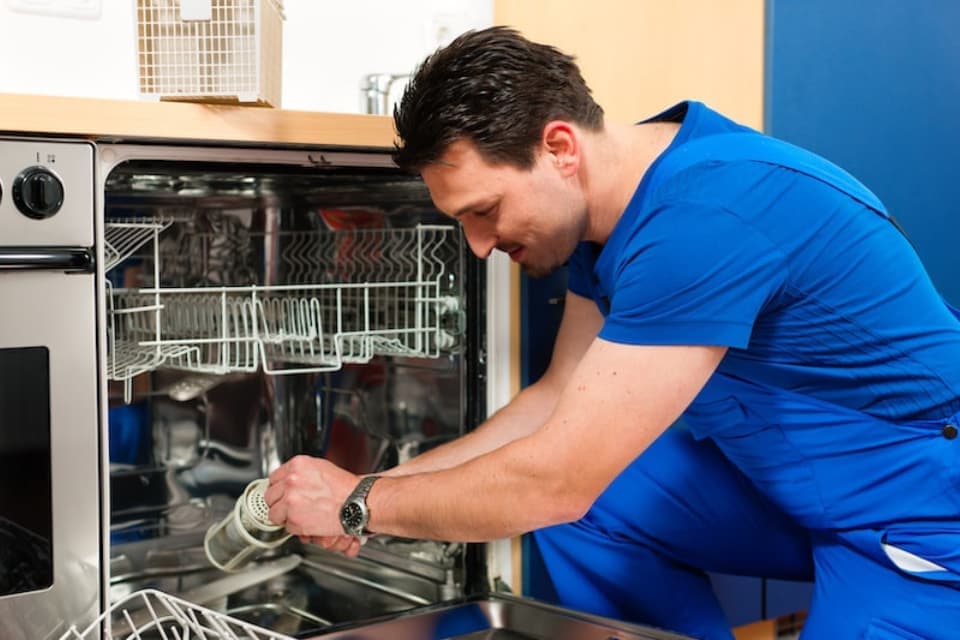
The filter is usually located at the bottom of the dishwasher, beneath the bottom rack. Most dishwashers have a twist-and-lift filter assembly — consult your owner’s manual if you cannot locate it.
How to Clean the Filter
- Remove the bottom rack
- Twist and lift the filter assembly out
- Rinse under warm water
- Use a soft brush or old toothbrush to remove food particles, soap scum, and other visible debris
- For tough food particles, soak briefly in hot water
- Check the fine mesh screen and clean gently
- Reinstall firmly and run a drain cycle
A sparkling clean filter restores water flow in most cases. Clean monthly to prevent clogs and unpleasant odors.
Step 3: Check the Drain Hose
A blocked drain hose causes standing water even when the pump is working. Check for kinks at the back of the machine and at the connection to the kitchen sink drain or garbage disposal. The hose should loop to its highest point before connecting — a high loop prevents dirty water from flowing back into the dishwasher tub. A clogged drain hose that cannot be cleared at the connection point requires professional assistance.
Step 4: Check the Air Gap
A blocked air gap can interfere with dishwasher drainage. The air gap sits near the sink faucet on the countertop. Unscrew the cap, remove any wet chunks or debris inside, rinse with clean water, and replace. Cleaning the air gap resolves drainage problems when the filter and hose are both clear.
Step 5: Check the Garbage Disposal
A clogged garbage disposal blocks dishwasher drainage entirely. Run the disposal for 30 seconds before starting the dishwasher. If you recently installed a new disposal, confirm the knockout plug on the dishwasher inlet has been removed — a common oversight that prevents draining.
Step 6: Check the Drain Valve and Check Valve
A stuck or worn-out check valve allows discharged water to flow back into the dishwasher tub after the drain cycle. A faulty drain valve prevents water from exiting during the wash cycle. Inspect the drain valve area at the back corner of the tub for debris or damage. If either component appears damaged, replacement is needed.
When to Call a Professional
Schedule service when:
- The drain motor has failed — a malfunctioning drain motor causes complete drainage failure
- The drain pump is cracked or making grinding noises
- The clogged dishwasher drain cannot be cleared with the steps above
- Electrical problems are present
- The cycle keeps interrupting before reaching the drain stage
Professionals can fix drain-related issues efficiently. Schedule service if your dishwasher will not drain after completing the steps above.

Preventing Future Drainage Problems
- Clean the filter monthly — food particles block it faster than most owners expect
- Scrape plates before loading — remove wet chunks and food waste before pre rinsing
- Run the garbage disposal before starting the dishwasher
- Follow maintenance instructions in your owner’s manual
FAQ
Why is my dishwasher not draining properly?
Common causes of a dishwasher not draining include a clogged filter, blocked drain hose, faulty drain pump, or a jammed garbage disposal inlet. Start by removing standing water and cleaning the filter — this resolves the majority of drainage problems. If the filter is clean and the hose is clear, the drain pump or drain motor may have failed and needs professional inspection. Most issues are resolved in a single same day service call.
How do I clean a clogged dishwasher filter?
Remove the bottom rack and twist out the filter assembly at the bottom of the dishwasher. Rinse under warm water and scrub with a soft brush or old toothbrush to remove food particles, soap scum, and fine mesh debris. For tough food particles, soak briefly in hot water. Reinstall firmly and run a drain cycle. Clean the filter assembly monthly to prevent future clogs and keep the dishwasher draining properly.
What is an air gap and how does it affect dishwasher drainage?
An air gap is a fitting near the sink faucet that prevents dirty water from flowing back into the dishwasher. A blocked air gap interferes with drainage by restricting water flow out of the drain hose. Remove the cap, clear any debris, rinse, and replace. If the dishwasher drains properly after cleaning the air gap, that was the blockage. Check it whenever the filter and drain hose are both clear.
When does a dishwasher drainage problem need a service technician?
Call a service technician when the drain motor or drain pump has failed, the drain hose is cracked, electrical problems are present, or the cycle keeps interrupting before the drain stage. A malfunctioning drain motor causes complete drainage failure that cannot be resolved with DIY steps. Schedule service if your clogged dishwasher drain will not clear after the full troubleshooting checklist — professionals fix drain-related issues efficiently, usually same day.
How do I know if my drain pump or drain motor has failed?
If the filter assembly is clean, the drain hose is clear, and standing water remains after the drain cycle, the drain pump or drain motor is the likely fault. Listen during the drain cycle — a working pump hums steadily. Silence or grinding indicates pump or motor failure. A malfunctioning drain motor prevents drainage entirely. Call a professional for diagnosis — drain pump replacements are completed same day with the right parts on the truck.
The Bottom Line
A dishwasher not draining almost always starts with a clogged filter or blocked hose — both fixable in minutes. Work through the checklist in order: filter, drain hose, air gap, garbage disposal, then check valve. If water remains in the bottom of the dishwasher after all that, the drain pump or drain motor needs professional attention. Toronto Appliance Repairs provides same day dishwasher repair across Toronto and the GTA — licensed technicians, honest pricing, and a 30-day warranty on every repair. Contact us today.